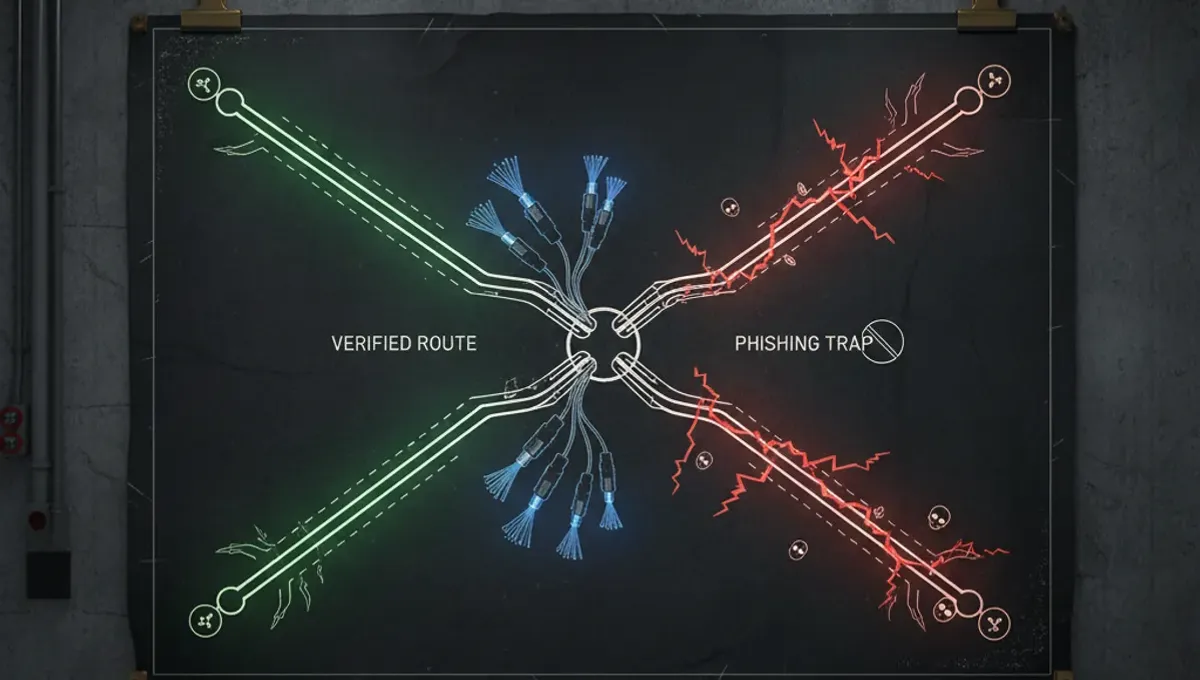
What a Dark Web Domain List Actually Is
A dark web domain list is a collection of .onion addresses, typically organized by category: forums, markets, chat services, search engines, or information resources. Unlike a traditional domain registry, there is no central authority that issues or tracks onion addresses. Instead, each .onion domain is generated by the Tor service operator using public-key cryptography, and the address itself encodes the service's public key. This means anyone can create a .onion address, and anyone can claim to host a service at that address. A list is only as reliable as the person or group maintaining it and the verification methods they use. Most lists you find online are either outdated, incomplete, or deliberately seeded with phishing clones designed to steal credentials or malware. The Hidden Wiki, for example, was historically a crowdsourced directory, but its decentralized nature made it vulnerable to vandalism and false entries. Understanding this limitation is the first step toward safe browsing.
Why Verification Is Critical: Phishing and Clones
Phishing on the dark web operates differently than on the surface web because users cannot rely on visual branding, SSL certificates, or domain registrar lookups. An attacker can register a nearly identical .onion address by brute-forcing variations or by simply hosting a clone at a different address and spreading it through forums, Reddit, or social media. The victim then logs in with their credentials, which the attacker captures. This happened repeatedly with popular dark web markets and forums. The only reliable way to verify a .onion address is through a PGP-signed announcement from the service operator, published on multiple independent channels. A dark web domain list that does not include PGP signatures or links to official verification methods is unreliable. Before visiting any onion site, check the official Tor Project resources, the site's own PGP key, and cross-reference multiple independent sources. Never assume a list is complete or current; addresses change, services move, and clones proliferate.
How Onion Addresses Are Generated and Why They Matter
When a service operator sets up a Tor hidden service, the Tor daemon generates a public-private key pair. The .onion address is derived from the service's public key using a cryptographic hash function. For v2 addresses (now deprecated), this produced a 16-character string. For v3 addresses (the current standard), it produces a 56-character string. The length and complexity of v3 addresses make them harder to spoof, but they are also harder to remember and share. This is why dark web users often rely on lists, bookmarks, or written references. The address itself proves nothing about the service's legitimacy or safety; it only proves that the service controls the corresponding private key. A dark web domain list that includes both v2 and v3 addresses is outdated, since v2 support was disabled in Tor. A list showing only v3 addresses is more likely to be current, though still subject to the phishing and clone risks described above.
Categories You Will See in Dark Web Domain Lists
Most dark web domain lists organize onion addresses by function. Common categories include search engines (Ahmia, Torch, Haystak), forums and discussion boards, email and messaging services, file hosting and document repositories, news and information sites, and historical records of closed markets. Some lists also include dark web browsers list references, dark web email list entries, or dark web hackers list sections, though these are often speculative or outdated. A few lists attempt to categorize by risk level or legality, but this is subjective and changes over time. The most useful lists separate active services from historical records and clearly mark which addresses are known to be offline or seized. When evaluating a list, check whether it distinguishes between services that are actively maintained and those that are archives or mirrors. A list that mixes live services with dead links wastes your time and increases the risk of accidentally visiting a phishing clone hosted at an abandoned address.
Reality Check: How Lists Get Outdated and Compromised
According to Tor Project documentation, onion services can go offline, move to new addresses, or be seized by law enforcement without warning. A domain list that claims to be comprehensive or current is almost certainly wrong. Services migrate, operators retire, and law enforcement regularly takes down major forums and markets. Additionally, lists hosted on GitHub, Reddit, or other public platforms are vulnerable to editing by malicious users or to being seeded with phishing clones by attackers. Court records and law-enforcement press releases show that many seized dark web services had multiple fake mirrors created by scammers before and after the takedown. This means a list you find today may contain addresses that no longer work, addresses that have been taken over by attackers, or addresses that never existed. The safest approach is to treat any dark web domain list as a starting point for research, not as a directory of verified services. Cross-check every address against official announcements, PGP signatures, and multiple independent sources before visiting.
How to Verify Addresses Before Visiting
Follow these steps to verify an onion address before accessing it:
- Copy the address from the list and note the source.
- Search for the service name plus "PGP" or "official announcement" to find signed verification.
- Check the Tor Project's official resources and the service's own website (if accessible via clearnet) for the correct .onion address.
- Compare the address from the list with the official address character by character; even one wrong character means it is a clone.
- If the service has a clearnet mirror, visit that first to confirm the official .onion address.
- Look for recent activity or updates from the service operator to confirm it is still active.
- Use a dark web browser list that includes security-focused options like Tor Browser with the latest security patches.
Never assume that an address in a list is correct just because it appears in multiple places. Attackers often seed multiple lists with the same fake address to create a false sense of legitimacy. If you cannot find an official PGP-signed announcement confirming the address, do not visit it.
Building Your Own Reference Without Relying on Lists
The safest approach is to minimize your reliance on third-party lists and instead build a personal reference of verified addresses. Start by bookmarking only addresses you have verified through official channels. When you find a service you trust, save its PGP public key and check future announcements against that key. Join official forums or mailing lists where service operators post updates, and follow their official social media accounts on clearnet platforms. Keep a separate encrypted file with your bookmarks and verification notes. This approach requires more work upfront but reduces your exposure to phishing and clone attacks. Over time, you will develop a dark web list 2025 equivalent that is tailored to your needs and based on your own verification. This is far more reliable than trusting a generic list maintained by someone you do not know. If you are researching the dark web for security awareness or academic purposes, consult the Tor Project's official resources and published security research rather than relying on community-maintained directories.
What You Should Do Now
Start by identifying one specific service you want to access or learn about. Go to the Tor Project's official website and search for guidance on that service. If it is a search engine, look for the official .onion address on the project's documentation. If it is a forum or community, search for recent news articles or security reports that mention the correct address. Bookmark only what you have verified. Do not collect a long list of addresses from a single source; instead, verify each one independently. If you are building a dark web combo list for research or security monitoring, document your verification method for each entry so you can update it later. The goal is not to have the most comprehensive list but to have a small set of addresses you can trust. This approach takes longer but protects you from phishing, malware, and wasted time chasing dead links or clones.
Frequently asked questions
Is there an official dark web domain list I can trust?
No single official list exists because there is no central authority for .onion addresses. The Tor Project publishes official resources and documentation, but not a comprehensive directory. The Hidden Wiki was historically crowdsourced but is vulnerable to vandalism. Your safest option is to verify each address independently through official announcements and PGP signatures rather than relying on any single list.
How do I know if a dark web domain list is outdated?
Check the list's publication date and compare addresses against recent official announcements. If the list includes v2 addresses (16 characters), it is outdated since v2 support ended. Try visiting a few addresses from the list; if most are offline or show error pages, the list is stale. Always cross-reference with multiple independent sources before trusting any entry.
Can I use a dark web domain list to find active markets or forums?
Lists can point you toward services, but you must verify each address independently. Many lists contain phishing clones or outdated addresses. Never assume an address is legitimate just because it appears in a list. Always check for official PGP-signed announcements and compare the address character by character before visiting.
What is the difference between a dark web domain list and a dark web browsers list?
A dark web domain list contains .onion addresses for services and websites. A dark web browsers list refers to software like Tor Browser, Tails, or Whonix used to access those services safely. You need both: a browser to connect and a verified address to visit. The browser protects your anonymity; the address verification protects you from phishing.
Why do phishing clones appear on dark web domain lists?
Attackers create fake .onion addresses that look similar to legitimate ones and seed them into public lists, forums, and Reddit discussions. Since there is no central registry, anyone can add entries. Users who do not verify addresses carefully may visit the clone instead of the real service and lose credentials or money. This is why verification through official channels is essential.